
Interactive DOOH: How a Billboard Becomes Something People Play
A digital screen in a station or a mall can switch content in milliseconds, react to weather and time of day, and be booked by audience segment. Yet most of what runs on it is a ten-second spot that would work just as well as a printed poster. The screen is digital, the contact is still analog: people walk past, and the ad hopes they looked.
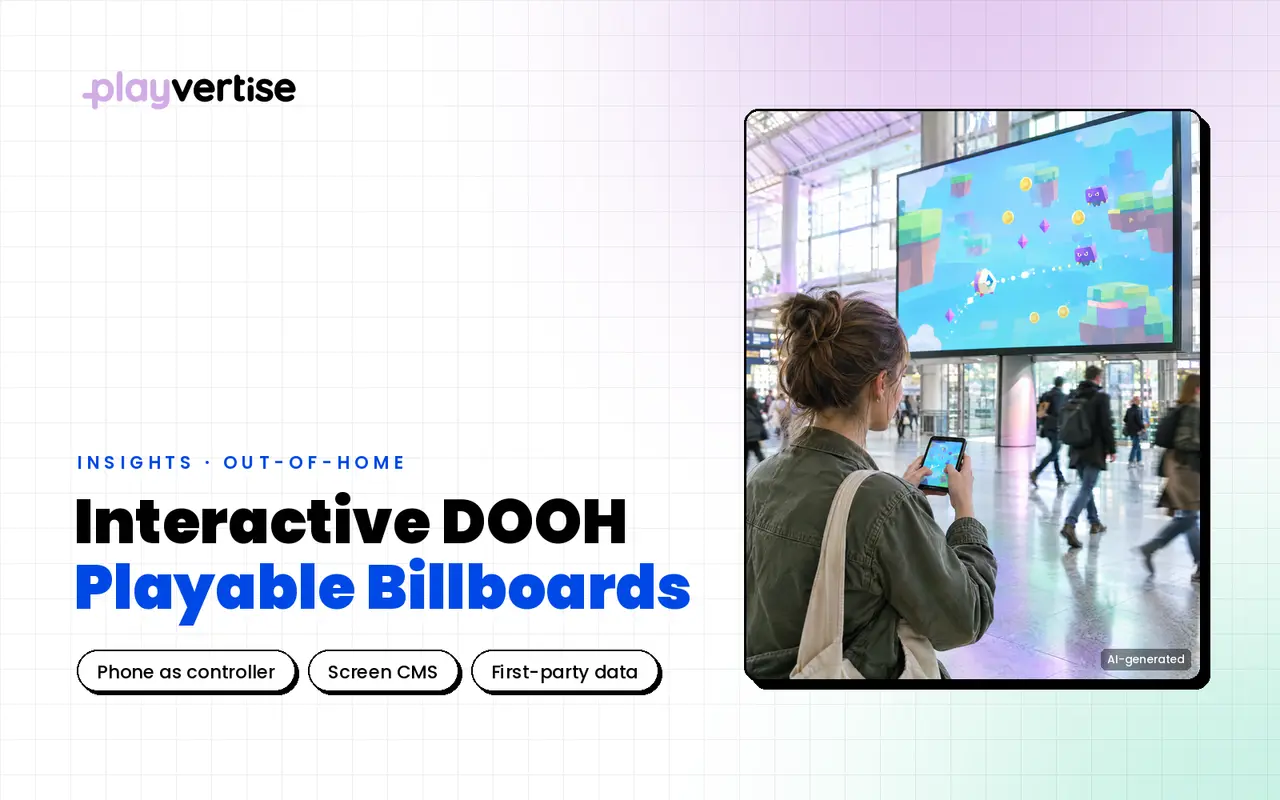
Interactive DOOH changes the direction of that contact. The screen stops broadcasting and starts responding.
What "playable" means on a public screen
On a playable billboard, the people walking past steer what happens on the screen. Someone scans the QR code, opts in on their phone, and their phone becomes the controller. Every tap moves a character, catches an object or spins a wheel on the big screen, in real time. A live leaderboard sits next to the game, so the next person in line already knows the score to beat.
Two set-ups are possible. In solo mode one person plays while everyone around watches, which on a busy square turns a single player into a small audience. In multiplayer mode several people join the same round from their own phones and play against each other, and a passing group becomes a match.
No one installs anything. No app, no download, no touchscreen hardware. The phone in the pocket is the controller, and the screen stays the screen it always was.
What happens behind the screen
For anyone who runs screens, the important part is how little changes. A playvertise game runs as a web application inside the existing content management system, whether that is Grassfish, Yodeck or any other web-based CMS. It slots into the playlist next to the regular spots. The network keeps its hardware, its scheduling and its booking logic.
The order of play is fixed, and it matters. The QR code leads to a branded page where participants enter the data you asked for and confirm their opt-ins. Only then does the game start. So the contact exists before the first move, and it is a first-party contact, handed over by someone who chose to take part.
Branding goes all the way through
A playable billboard only works for the brand if the brand is the game, not a logo in the corner of a generic template. In the GameHub you first choose the mode, here Screen and Digital Signage, then a game from the game library, and brand it end to end: logo, colors, sprites, prize pool and win probabilities, and the lead fields you need. If you want to go deeper on that point, our article Branding in games: more than a logo in the corner covers it.
Setup is quick. After that, every new location or campaign phase is a matter of configuration.
What becomes measurable
Classic DOOH reports reach: how many people were likely in front of the screen. A playable screen adds what those people did. Plays and new opt-in contacts appear in the dashboard in real time and can be exported as a CSV. Instead of an estimate of who might have looked, you get a count of who took part, and a list of people who want to hear from you.
For screen owners this is a new argument in the sales conversation. A location that can show participation, not only footfall, sells differently.
The build stays useful after the flight
Because the game is licensed monthly, it does not end with the media flight. During the license term the build belongs to you and runs as often as you like on the channels the Screen mode covers: the DOOH network, the trade show stand, the store window. It can be adapted to the season along the way, with a new prize pool for Christmas or other colors for spring.
Bottom line
Interactive DOOH uses what digital screens could always do and most campaigns leave unused: react. A playable billboard turns a glance into a few minutes of attention, and attention into opt-in contacts you own. It runs in the screen CMS you already use, with no app and no extra hardware.
Advertising you play. Have screens or a DOOH booking coming up and want to see what your brand looks like as a game on them? Let's talk at playvertise.io.
Want to try this idea as a campaign?
We translate the idea from this article into a concrete game setup, tailored to your channel and budget.
Free, no strings attached